Craft
Philosophy
KIKUNO speakers are handcrafted in Amsterdam by Yuji Tsutsumida, a Japanese sound engineer who has worked in many acoustic spaces around the world.
His philosophy is simple, organic sound, which is natural and true to the original, has the power to stir emotion, to excite and to inspire. His goal with KIKUNO is to make sure that the subtleties and power of organic sound can be experienced anywhere.
Yuji is inspired by the pioneers in speaker design and the many sound engineers who have come before him. He hopes to continue their legacy with the same love and passion for good sound.
A range of KIKUNO speakers are available for both the home and for public spaces (bars, restaurants, shops, theatres, clubs, etc).
Custom speakers can also be built to suit your specific space and needs.
The flat diaphragm
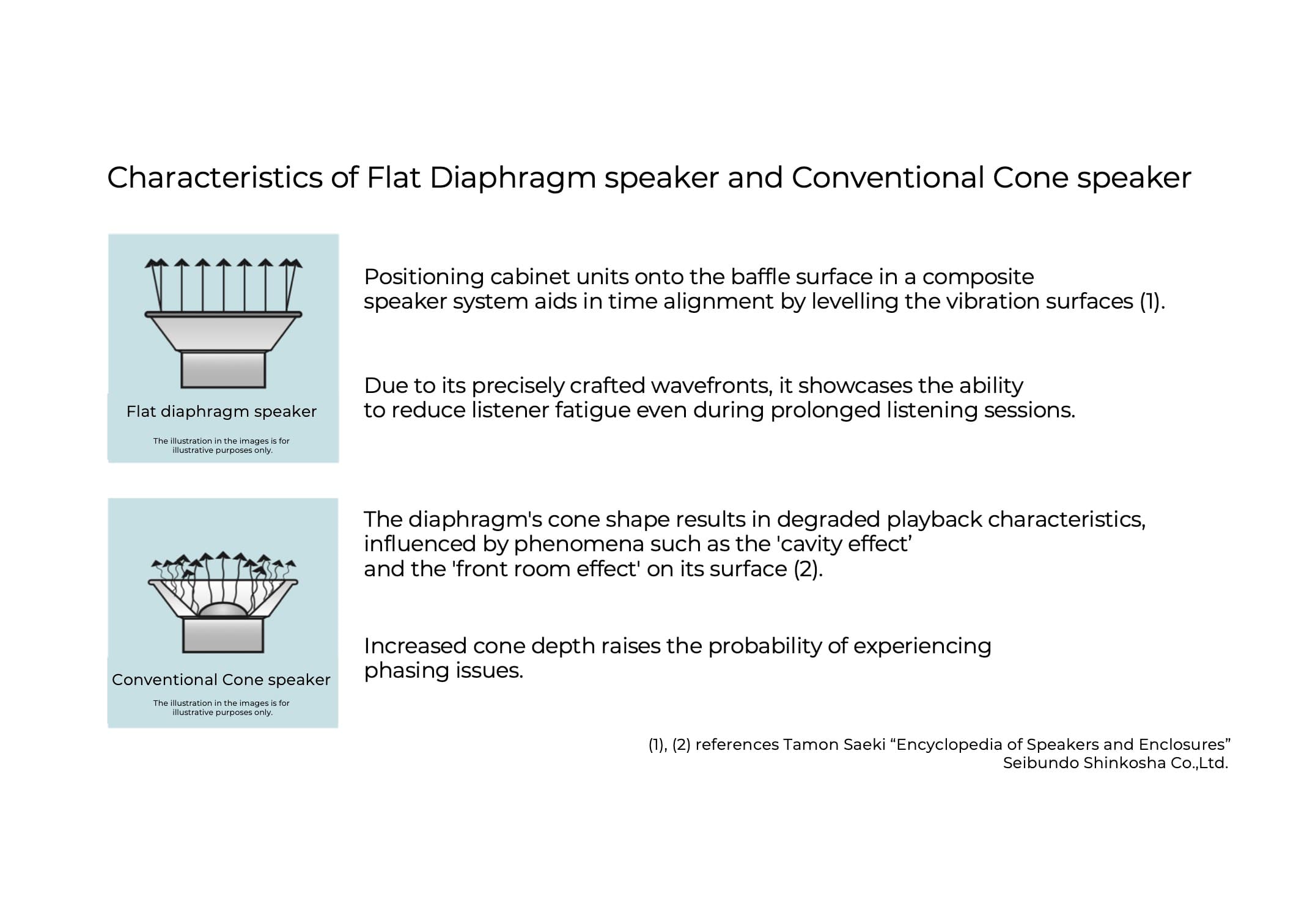
Characteristics of Flat Diaphragm speaker and Conventional Cone speaker
Positioning cabinet units onto the baffle surface in a composite speaker system aids in time alignment by levelling the vibration surfaces (1).
Due to its precisely crafted wavefronts, it showcases the ability to reduce listener fatigue even during prolonged listening sessions.
The diaphragm’s cone shape results in degraded playback characteristics, influenced by phenomena such as the ‘cavity effect’ and the ‘front room effect’ on its surface (2).
Increased cone depth raises the probability of experiencing phasing issues.
(1), (2) references Tamon Saeki “Encyclopedia of Speakers and Enclosures” Seibundo Shinkosha Co.,Ltd.
Doro zome
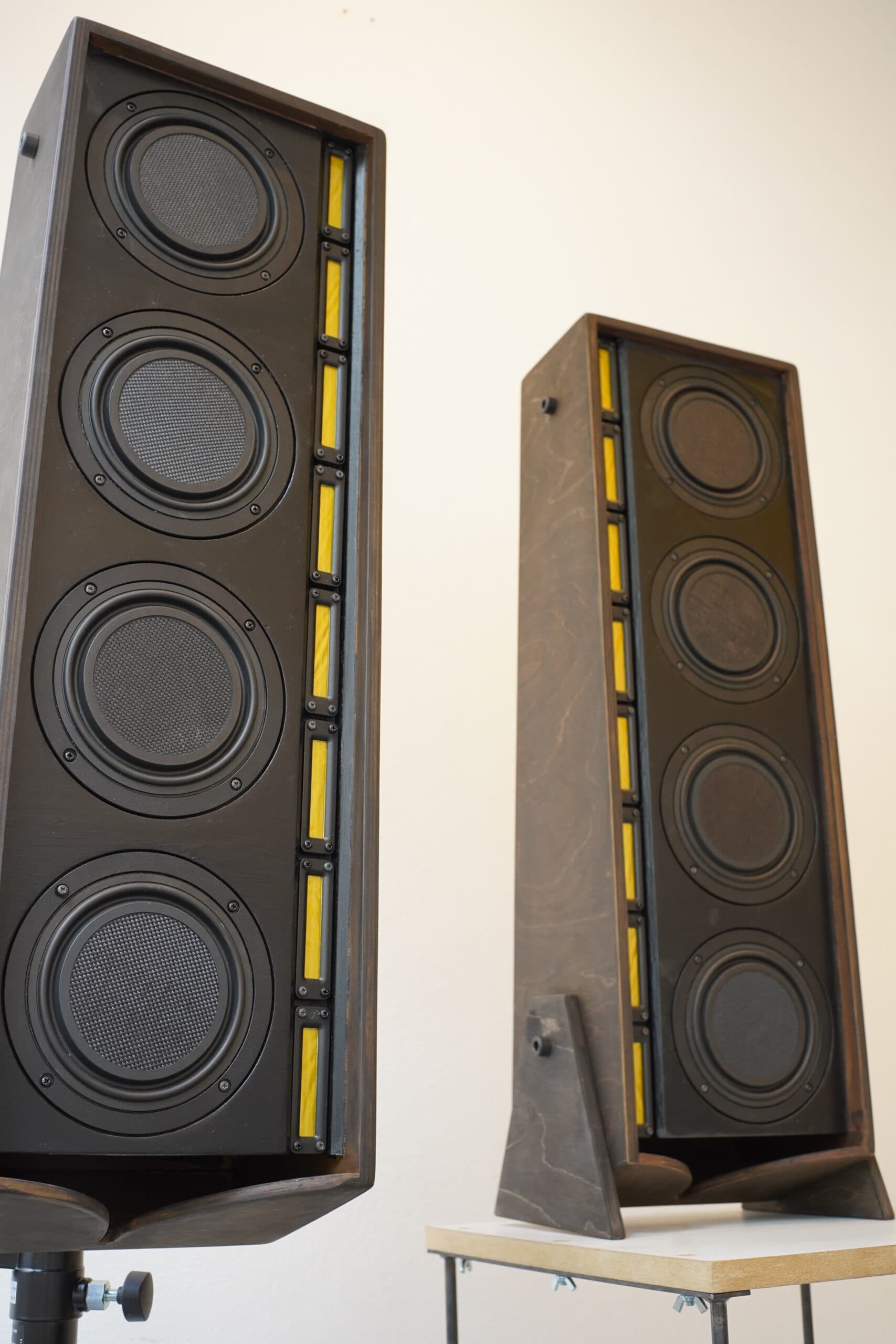
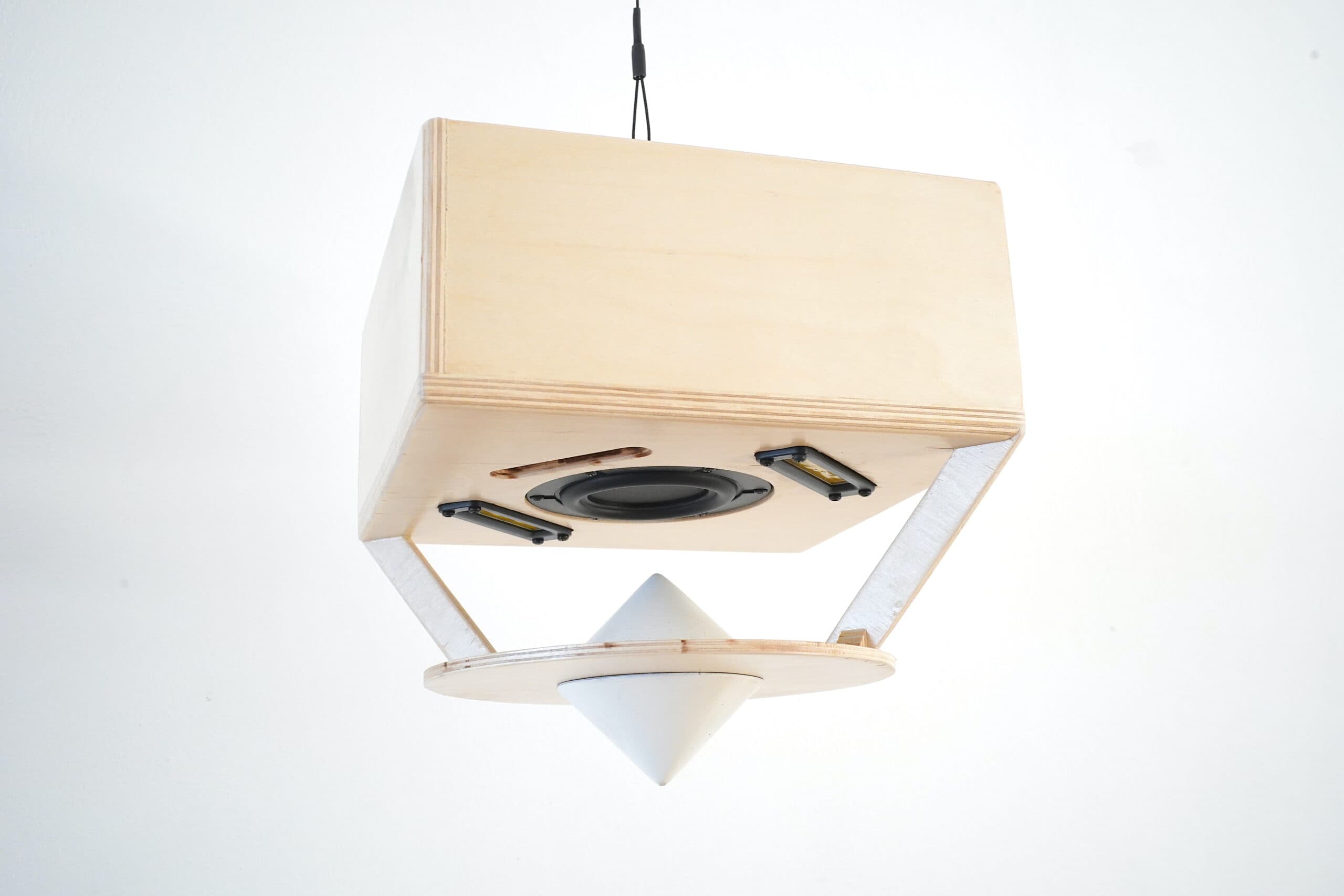
The dye used to colour the orbiter series comes from “Kanai Kougei”, a Japanese company which utilises a traditional technique called doro zome (mud dyeing). This technique originated 1300 years ago in Amami Oshima, an island in the south of Japan. Doro zome is traditionally used to dye the yarn of kimono cloth but recently has been used to dye other materials.
The dye used to colour this speaker comes from “Kanai Kougei”, a Japanese company which utilises a traditional technique called doro zome (mud dyeing). This technique originated 1300 years ago in Amami Oshima, an island in the south of Japan. Doro zome is traditionally used to dye the yarn of kimono cloth but recently has been used to dye other materials.